Tuesday, 6 October 2015

In-Depth Information on Function of Flowmaster Catalytic Converters

Catalytic converter present inside the vehicle is one of the greatest inventions related to control of auto emission in the field of monitoring greenhouse gas emissions. Though the process starts in the vehicle’s engine, the catalytic converter is the significant auto part since; it is the last stop for exhaust gases where they can be converted into simpler substances before expelled out into open air. 

Catalytic Converter: In Brief
The catalytic converter mainly functions for reducing the emission level from the combustion engine, which in used in the modern vehicles. During the combustion process, sufficient amount of oxygen is not available for oxidizing the carbon fuel into water and carbon dioxide for which, toxic by-products are being produced. The Flowmaster Catalytic Converters typically provide a platform for reduction of those harmful by-products such as carbon monoxide, nitrogen oxides and hydrocarbons into simpler substances like water vapor, carbon dioxide and carbon dioxide through the process of oxidation. 

How Catalytic Converters Work
The catalytic converter is certainly not a magical box rather, is an intricate arrangement, which functions to reduce the level of auto emission. The hot exhaust gases drive out through the engine and passes through the catalytic converter of an exhaust system. Inside the expanded tube, there is a honeycomb or network of ceramics. The ceramic checkpoint is covered with substances, which react with exhaust for eliminating the obnoxious emissions. Though the exhaust gases flows through the catalytic converter at high velocity, molecules which cover the ceramics react within milliseconds till those are converted into something harmless or comparatively less harmful such as water vapor, carbon dioxide and nitrogen.

The catalytic converter is a significant auto part that not only ensures proper functioning of the vehicle but also helps to attain a good fuel economy. Installing the Flowmaster Catalytic Converters to vehicles is the ideal choice, which has been designed as per the global quality standards and come with extended durability. They are manufactured by utilizing the high-end catalytic technologies that reflect superiority in terms of design, durability and utility and thus, hold a substantial proportion of share in the market.

Thursday, 1 October 2015

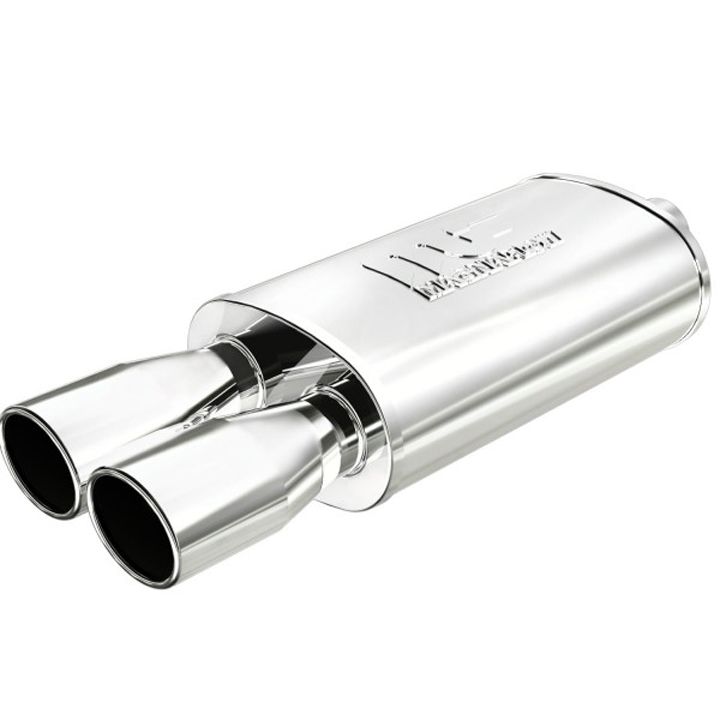
Detailed Knowledge on Function of Magnaflow Exhaust Parts

Keeping the exhaust  system in proper condition is extremely vital to maintain a good fuel economy of the vehicle. Additionally, it ensures better safety while driving and restricted level of auto emission. So, for auto owners witnessing any kind of problem with their vehicle’s exhaust system, the ideal choice is to get it properly inspected by a professional and get it fixed as soon as possible.

What Exhaust Systems Do  
 
For proper functioning of the vehicle,  a substantial proportion of air and fuel is burned inside the combustion chamber that releases near about six types of emission elements, including obnoxious gases like nitrogen  oxide, carbon monoxide and nitrogen monoxide.  The exhaust system is mainly responsible for removing such emissions, thereby allowing it to be safe for both the passengers and the environment. Additionally, there are two crucial functions performed by this system. First is to deaden the explosive noise of combustion released during the combustion process and second is to ensure that the vehicle runs with optimum fuel efficiency. 

The exhaust system comprises of certain important parts and proper functioning of each single part is essential to ensure that the system functions at its best.  Following here is a list of the various Magnaflow ExhaustParts of an exhaust system.

Exhaust Manifold

The manifold is fixed at the front of exhaust system that is attached to engine at the portion of the cylinder head. The component performs the vital function of driving the exhaust gases from cylinders to one single pipe, which also burns the unused fuel remained in the engine. 
 
Oxygen Sensor

This component is fixed near to the exhaust manifold, which mainly send and monitor the readings of oxygen level to the vehicle’s computer.

Exhaust Pipes

Exhaust pipes perform the function of carrying the exhaust  down through the whole system. They are connected to exhaust manifold in the front and end by being  fixed with the tailpipe, where the exhaust gases finally makes its exit from the vehicle. 

Catalytic Converter

This significant auto part are fixed next to exhaust manifold and functions to convert poisonous pollutants present in  the exhaust gases into simpler compounds before they are being released into open air.

Muffler

This auto part serves as  the silencer that deadens the loud noises produced during the combustion process from the engine. They promote better safety of drivers, thereby lessening the chances of distraction while driving. 
   
Since, exhaust parts need to encounter extreme pressure while performing such crucial functions, it is quite important for proper maintenance of them to ensure that they perform at their best. The Magnaflow Exhaust Parts come with superior performance and extended durability as they are designed by making use of cutting-edge technologies.

Thursday, 24 September 2015

Utility of Performance Exhaust Headers in Functioning of Vehicles

One of the most common modifications that auto owners look for redefining the potency of their vehicle is to change the exhaust header. In general, various aftermarket exhaust parts are being installed for replacing the factory ones that eventually, boost up the performance level of vehicles. However, apart from performance, it is also done by auto owners for enhancing the vehicle’s appearance and making it more impact. 

How Exhaust Headers Affect Vehicle’s Performance

Generally, the internal combustion engine of the vehicle requires a way for the exhaust gases to expel out from the engine. On the four-stroke- cycle engine, it is typically done on the fourth stroke that is more precisely known as the exhaust stroke. The Performance Exhaust Headers mainly function to drove these exhaust gases from the engine and vent into open air. If the exhaust valves would have vented into the atmosphere directly, it might have resulted into the engine becoming extremely noisy.  This is the reason for which, exhaust headers are being installed into the vehicles.

Design of an Ideal Exhaust Header

As the ideal choice, exhaust headers must be designed in a way so that they do not increase the back pressure of the engine. Improperly crafted headers might result in increase in the back pressure of engine, thereby causing the engine’s power to get utilized unnecessarily in the course of driving out the burnt gas. The key attribute of an ideal exhaust header is to manufacture them in the way for minimizing the back pressure to the maximum as possible. The three factors considered in a header design are length of the pipe, how much the pipe bends and diameter of pipe. Thus, while choosing the perfect set of exhaust header for the vehicle, make sure to consider these elements for making a feasible choice at the end.

Replacing the OE exhaust header with a set of Performance Exhaust Headers certainly is a beneficial option for gearing up the functionality of the vehicle. Such products are designed in the perfect manner and thus, cause little or almost negligible back pressure to the engine. 

Thursday, 20 August 2015

Key Pointers of Choosing the Best Set of Performance Exhaust Tips

Adorning your car with a pair of quality exhaust tips is like ornamenting the finger with a precious ring. Being an elemental part of a vehicle, this auto part is one of the key styling features for auto aficionados when, looking for adding a personal flare to the vehicles. However, while buying the right set of exhaust tips, there are certain factors to look for ensuring that you end up in buying the right product. 

Thursday, 30 July 2015

A Complete Guide to Clean the Aftermarket Exhaust Kits

The exhaust system, being an elemental part, plays an important role in the functioning of the vehicle that mainly drives out the exhaust gases being released by the engine during the combustion process. Exhaust gases being released by the engine compartment contains severe obnoxious pollutants, which if stayed within the interior of the vehicle can question the safety of the driver and other passengers of the vehicle. As the needful, those harmful pollutants are being processed and converted to simpler substances, thereby released into the atmosphere.

Thursday, 23 July 2015

Performance Catalytic Converters: Tips to Choose the Right One

An automobile is an arrangement of various auto parts, each of which performs a definite function for proper functioning of the vehicle. Malfunctioning or failure of any auto part might result to a sudden breakdown and leave you in middle of the road. Among the various imperative parts, a catalytic converter plays an elemental part that facilitates the prime task of reducing the extent of automotive emission. 


Catalytic Converters: In Brief

The catalytic converter is a metal canister, which scrubs the pollutants released during the combustion process and convert those into simpler compounds. Some of the harmful gases being released by the engine are:

• Hydrocarbons
• Carbon dioxide nitrogen oxides
• Sulfur dioxide phosphorous
• Lead and various other metals

These obnoxious exhaust gases are mainly converted into harmless substances by the performance catalytic converters to ensure minimal amount of auto emission is released into the atmosphere, thereby lessening the extent of environmental degradation. However, there are certain factors that need to be considered while buying the right one.

Identifying the Original Emission System

Before buying the right type, it is important to keep note of the emission equipment that the vehicle came with. To do that, you can check the emission sticker, which is generally located near the firewall area or under the hood behind the engine. Mostly, different states either follow the set of federal standards of environmental protection agencies or adopt certain strict board regulations.
Universal or Direct-Fit

In general, there are two types of catalytic converters: direct-fit and universal. The underlying difference is quite simple. The direct-fit catalytic converters have been designed to meet the specifications of the original cat it came with, ranging from the arrangement of O2 sensors to diameter of tubing. Compared to the former one, the universal catalytic converters come with a set of standardized features that can be welded to fit the place of the original cat the vehicle came with.

Installing the prime quality Performance catalytic converters to your vehicle certainly makes it more performing as it ensure better conversion of pollutants into harmless compounds. Being the solely responsible pollution reducing units in the automobile, these auto parts need to be properly maintained and keep in proper shape to ensure sound functioning of the vehicle.

Friday, 19 June 2015

Common Problems Affecting the Efficiency of Exhaust Systems

An area that mostly gets unnoticed is the exhaust system of a vehicle, but it is a significant part, which perform a number of jobs ranging from expelling the exhaust gases, noise reduction to improve the fuel consumption, thereby improving the engine performance. Thus, being an elemental part of the vehicle, it needs to be kept in good shape for which a proper maintenance program is to be practiced by the car owners in order to ensure its performance.